Where to See Kiwi in the Wild
Where to see kiwi in the wild, and when a sanctuary or a hatchery is the better choice: Stewart Island, Tāwharanui and Rotorua compared on odds, effort, age limits and price (Oct 2026).
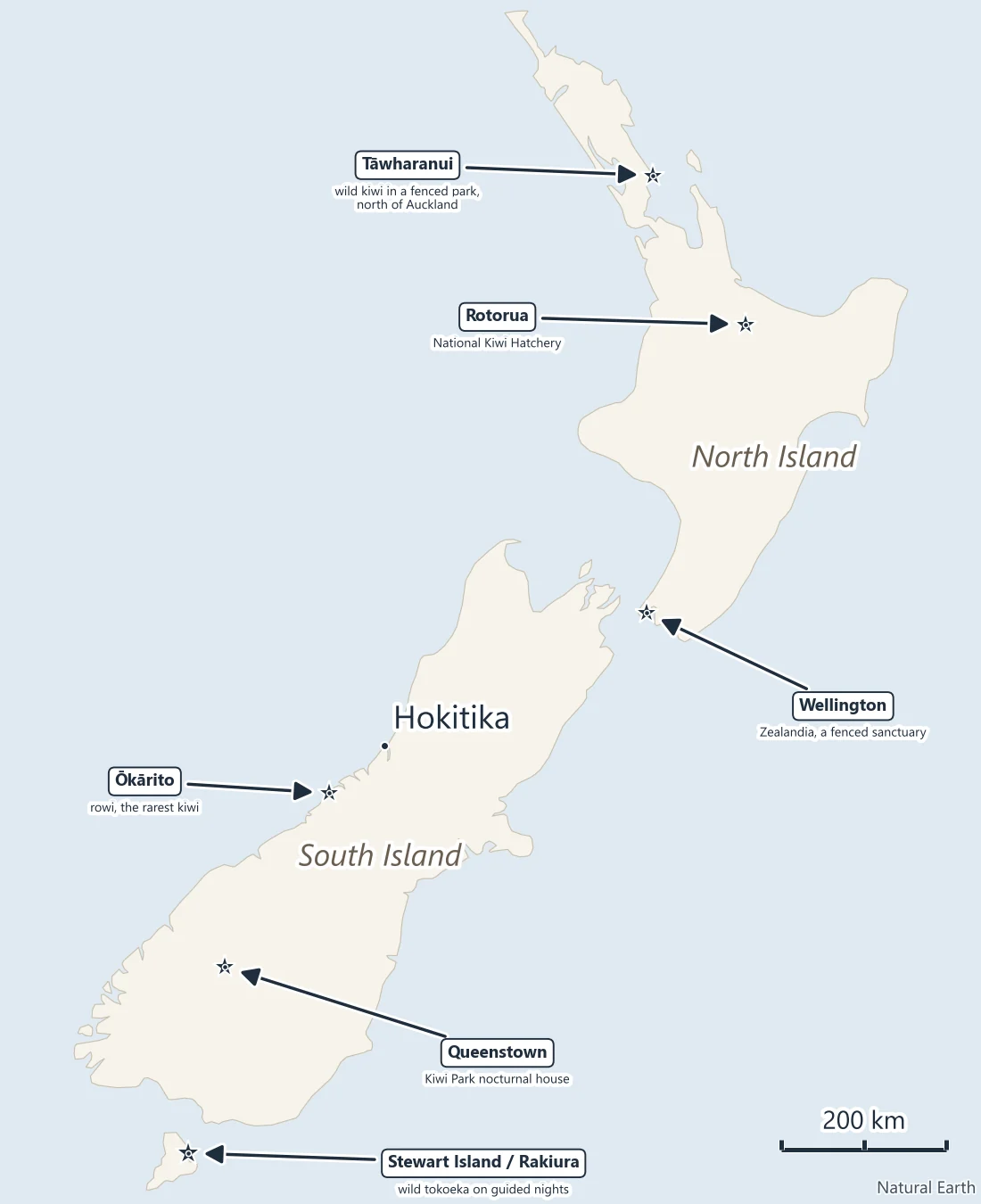
The wildest kiwi you can book is on Stewart Island, where Rakiura tokoeka live in open forest and RealNZ’s guides search for them after dark; the easiest wild kiwi is at Tāwharanui near Auckland, inside a fenced park; and the only sure sighting is a nocturnal house, such as the National Kiwi Hatchery in Rotorua. Which is right depends less on the bird than on your route, your time and who you travel with.
Three kinds of kiwi experience
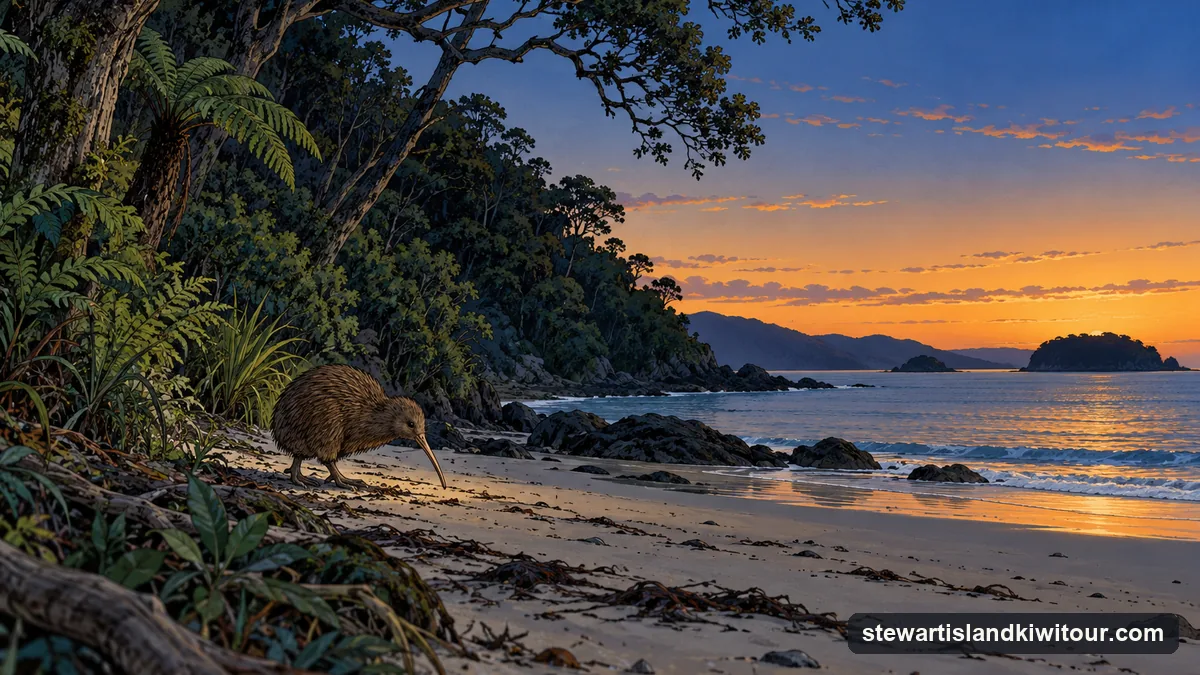
Wild, unfenced. On Stewart Island the tokoeka live in the forest and on the coast of an island where 85% of the land is Rakiura National Park. DOC calls it perhaps the best opportunity anywhere in New Zealand for viewing kiwi in the wild, and notes that some of these kiwi feed in daylight. A sighting depends on the night, the weather and how quietly the group walks. RealNZ cannot guarantee one; of the GetYourGuide reviews of its kiwi night that say either way, 24 describe seeing a kiwi and 8 say they saw none.
Wild, inside a fence. Tāwharanui north of Auckland and Zealandia in Wellington are sanctuaries where kiwi live free inside a predator-proof fence. The birds are wild, but the area is protected and the population is managed, so the odds are good and the trip is short. The Wellington sanctuary says kiwi are seen on most of its night tours, but not guaranteed; those night tours are booked with the sanctuary itself.
A nocturnal house. Hatcheries and wildlife parks keep kiwi in a darkened enclosure where you can watch them by day. The National Kiwi Hatchery in Rotorua adds the conservation side: eggs and chicks in season, and the work of raising birds for release. You will see a kiwi; you will not see it in the wild.
Side by side
| Stewart Island night | Tāwharanui night walk | National Kiwi Hatchery | |
|---|---|---|---|
| The kiwi | Wild Rakiura tokoeka in open forest | Wild North Island brown kiwi in a fenced park | Adult kiwi in a nocturnal house; eggs and chicks in season |
| Sighting | Likely, never guaranteed | Not guaranteed | Certain |
| Length | About 4 hours, after dusk | 2 to 3 hours | 1 hour |
| Ages | 15 and up | Check the listing | 5 and up |
| Getting there | Ferry or flight to Oban, a night on the island | North of Auckland; transport can be added | Check in at the Agrodome, Rotorua |
| Price | RealNZ's kiwi night, from US$152 | Social Nature Movement's walk, from US$62 | Kiwi Encounter Tour, from US$45 |
From the GetYourGuide listings, checked October 2026, and the operators’ own pages.
Book the one that fits your trip:
Stewart Island Kiwi Night
Open forest at the bottom of the country, October to April. Needs a night in Oban; ages 15 and up.
Check dates →Tāwharanui Night Walk
Wild North Island brown kiwi inside a fenced park, with the night sky on clear evenings.
See the walk →National Kiwi Hatchery
A sure sighting in the nocturnal house, and eggs or chicks from about September to March. Ages 5 and up.
See the hatchery →Prices, ratings and review counts from GetYourGuide, checked October 2026; operators change prices, so treat them as a guide, not a quote.
How rare is it to see a kiwi in the wild?
Rare without a guide. Most kiwi are active at night, they are shy, and they hear you long before you see them. RealNZ itself calls the kiwi elusive and rarely seen in the wild. With a guide in the right place the odds change: the Wellington sanctuary says kiwi are seen on most of its night tours, and most of the Stewart Island reviews that mention it describe a sighting, yet neither operator promises one. The rarest species, the rowi, has one natural population, around Ōkārito on the West Coast, which DOC puts at more than 600 birds.
How to behave around a wild kiwi
Keep silent and still and let the guide work the torch. Wear soft clothing that does not rustle. If you carry a torch of your own, cover it with a red filter or use a red light: on Stewart Island DOC asks this of everyone looking for kiwi, and asks people not to use bright lights at all. No flash: DOC, RealNZ and the nocturnal houses all rule it out. Do not play recorded calls; DOC forbids playing bird calls on Ulva Island. And on your own, stay on the track, which DOC asks so as not to disturb kiwi, and never stand between a kiwi and the bush. Dogs are the biggest threat to adult kiwi, according to DOC, which is one reason they are banned from places like Ulva Island.
“Wild kiwi tours” and “Kiwi Experience”
Two travel companies carry the name and come up in the same searches. Wild Kiwi (wildkiwi.com) runs small-group tours of New Zealand, up to 18 people, and Kiwi Experience (kiwiexperience.com) runs hop-on hop-off bus passes and bus tours around the country. They are ways of travelling New Zealand, not kiwi-spotting trips; if a kiwi is on your list, check whether a guided kiwi walk is on the itinerary or book one yourself where the route passes.
See open nights on Stewart Island →
The kiwi nights, ages, lengths and prices are from the GetYourGuide listings, read in US dollars on 30 October 2026, and RealNZ’s encounters page; DOC’s tokoeka, Rakiura National Park, rowi, kiwi threats and Ulva Island pages, and its Rakiura Track and Glory Cove Scenic Reserve pages for the torch, flash and track rules; Zealandia’s night tour page; the National Kiwi Hatchery’s own site; Wild Kiwi’s and Kiwi Experience’s own sites. All read in October 2026.
A Wild Kiwi on Stewart Island
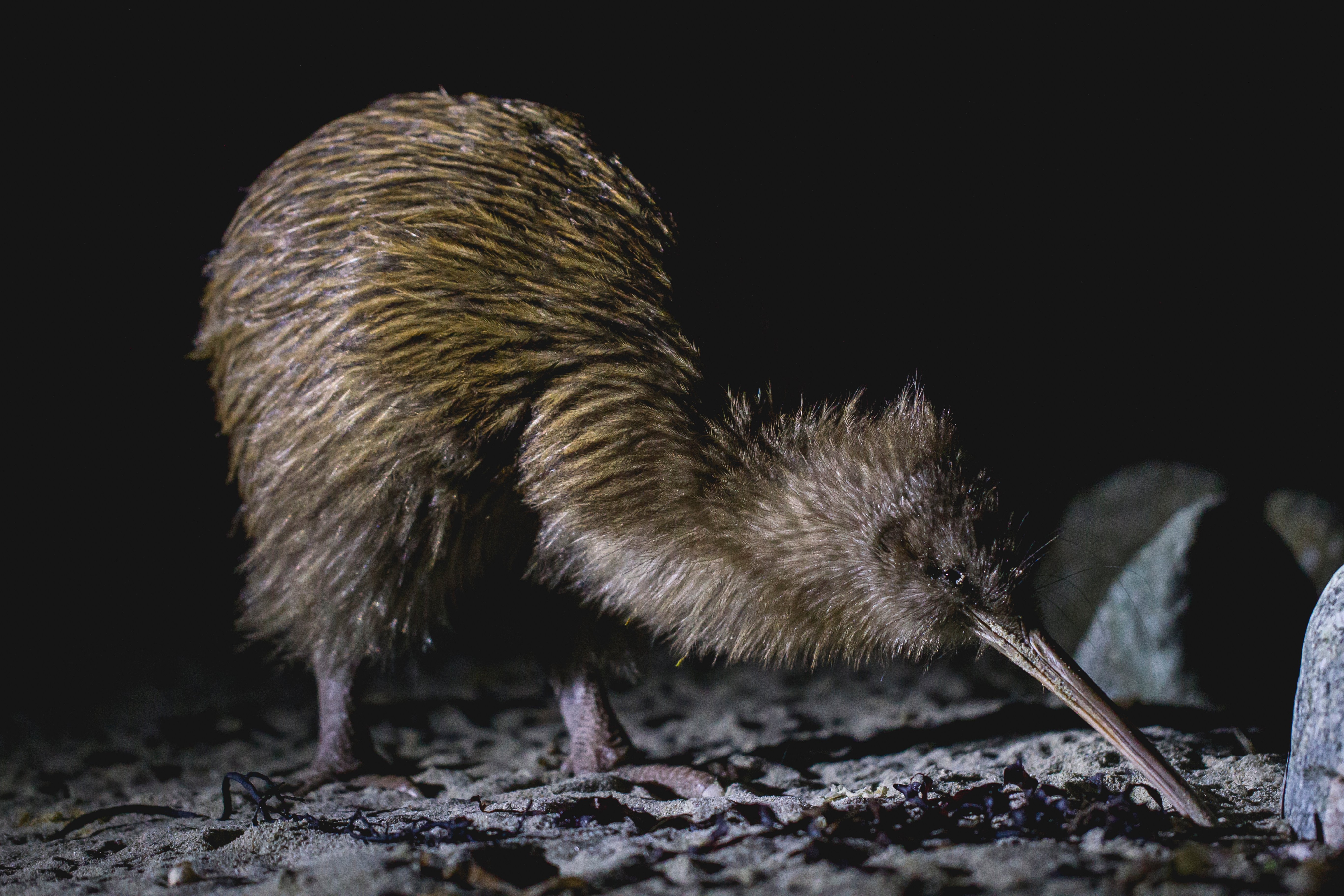
RealNZ's guided evening walk from Oban for wild Rakiura tokoeka: about four hours, groups of up to 10, October to April, ages 15 and up, with a night on the island. Free cancellation up to 24 hours before, as listed in October 2026.
Check Dates